

How to Use Tissue Paper in Mixed Media Art

Tissue paper probably isn't the most exciting-looking art supply sitting in your studio.
It's thin, it wrinkles, it tears ridiculously easily, and if you put it next to a pile of gorgeous handmade papers, it's probably not the first thing you're going to reach for. But tissue paper is one of my favorite supplies. I use it over and over again in my mixed media work because there is so much you can do with it.
You can crinkle it to create texture, paint it, stamp it, tear it into little pieces, use it to soften other layers, or cover an entire surface with it. Because it's so thin, it can almost disappear into your artwork while still leaving behind color, pattern, texture, or little glimpses of whatever is underneath.
And perhaps one of my favorite things about it is that plain white tissue paper is inexpensive, easy to find, and doesn't have to stay plain for very long.
So if you've got some tissue paper tucked away with the gift-wrapping supplies, go grab it. Let me show you a few of my favorite ways to use it.
Start Simple: Use Tissue Paper as a Collage Layer
One of the easiest ways to introduce tissue paper into your mixed media work is to simply treat it like any other collage paper.
Tear off a piece, adhere it with matte medium, and start layering.
The difference is what happens because tissue paper is so thin. Depending on the paper and what you put underneath it, some of those earlier layers can still peek through. Text, paint, marks, and other collage elements don't necessarily disappear completely when you add tissue paper over them.
That makes it especially useful when you want another layer without completely covering everything you've already done.
I usually prefer tearing tissue paper rather than cutting it because I like those imperfect edges. Once they're adhered, those torn edges tend to become part of everything happening around them instead of looking like a piece of paper sitting on top of the artwork.
And don't worry about getting every wrinkle out. Sometimes the wrinkles are exactly what you want.

Misty’s hands holding a piece of crinkled white tissue paper over a colorful mixed media art journal page, ready to add another translucent layer of texture.
Create Texture With Crinkled Tissue Paper
This is probably one of my favorite tissue paper techniques because it's almost ridiculously simple. Scrunch it up. That's it.
Take a piece of plain tissue paper, crinkle it in your hands, open it back up, and adhere it to your surface without completely flattening all those wrinkles you've just created.
Once it's dry and you begin adding paint over the top, all those little raised areas start catching color differently. Suddenly a completely ordinary piece of tissue paper has given you this wonderful uneven surface to work over.
You can use a larger piece when you want texture across a significant part of your background or tear it into smaller pieces and add texture only where you want it.
This is also one of those techniques that's much easier to understand when you can actually see it happening.
Tissue Paper Magic: Easy Texture Hacks for Stunning Mixed Media Layers
Make Your Own Custom Tissue Paper
This is where plain white tissue paper gets a whole lot more interesting.
Instead of only using tissue paper as something underneath your artwork, you can turn it into an art supply of its own.
I love adding paint, stamps, patterns, and marks to plain tissue paper and creating my own little collection of papers to use later. You don't need to make them perfect or even know what artwork they'll eventually become part of.
Actually, I think they're more useful when you don't.
Try adding loose areas of acrylic paint, stamping with waterproof ink, creating simple patterns through a stencil, or making marks with supplies you already have on your table.
You can make one sheet bold and colorful and leave another mostly white with just a few black marks or patterns scattered across it. Once they're torn apart and layered into artwork, even a very simple sheet can give you dozens of interesting little pieces to work with. And because you made the paper, you're not limited to whatever colors and patterns happened to be available at the store. You can create exactly what works with your own artwork.
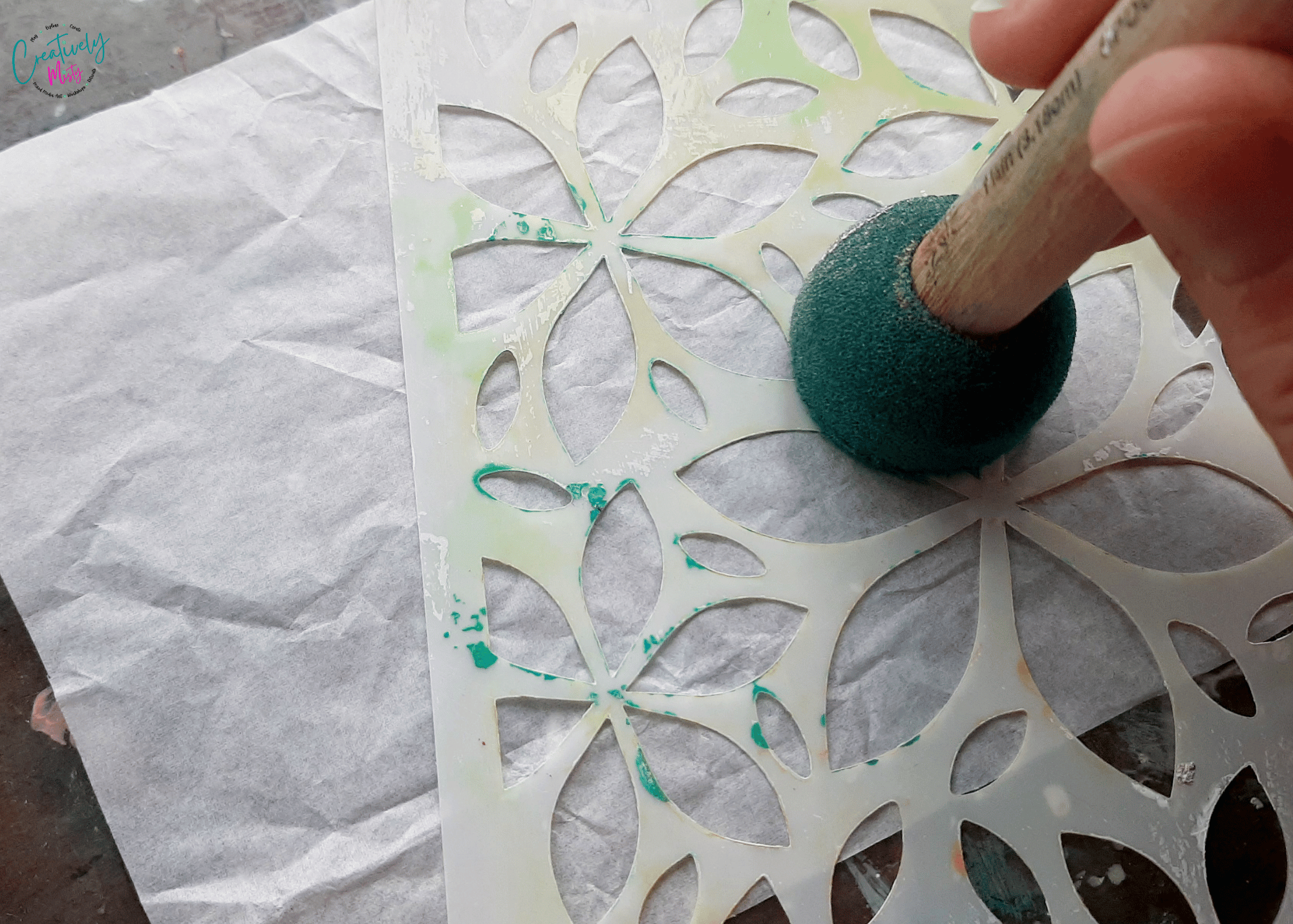
Close-up of teal acrylic paint being applied through a floral stencil onto white tissue paper to create custom patterned tissue paper for mixed media art.
Use Tissue Paper to Soften a Background
This is one of the quieter ways I use tissue paper, but it's incredibly useful.
Mixed media backgrounds can get busy quickly. You've got collage, paint, marks, patterns, texture... and sometimes you reach a point where everything is competing for attention.
Instead of adding another bold layer, tissue paper can help you soften what's already there.
A lightly marked or mostly white piece layered over a busy area can knock things back without completely hiding them. You still get glimpses of the color, text, or pattern underneath, but suddenly that area isn't shouting quite so loudly.
I love this because it lets me keep the history of the page. I don't have to completely paint over something and lose it. I can simply push it farther into the background.
And if you've ever created a mixed media background that felt like a whole bunch of interesting things that weren't quite talking to one another, this can also help separate areas start feeling more connected.
Tear It, Layer It, Let It Disappear
One of the things I had to learn with mixed media was to stop being precious about every layer.
If I put down a piece of paper I loved, I used to want to make sure I could still see it. Otherwise, why did I bother putting it there? Now I'll happily cover most of it.
Tissue paper is wonderful for this because it encourages that kind of layering. Tear a piece, adhere it, paint over part of it, add another layer, make marks across it, cover some of those marks back up.
Let things disappear.
Those little pieces that remain visible are often much more interesting than the original piece was on its own. A torn bit of pattern, half of a stamped image, or a wrinkle catching a different paint color gives your eye something to discover.
That's part of what creates the richness I love in mixed media.
You don't necessarily need more stuff on the surface. Sometimes you just need more interaction between the layers already there.
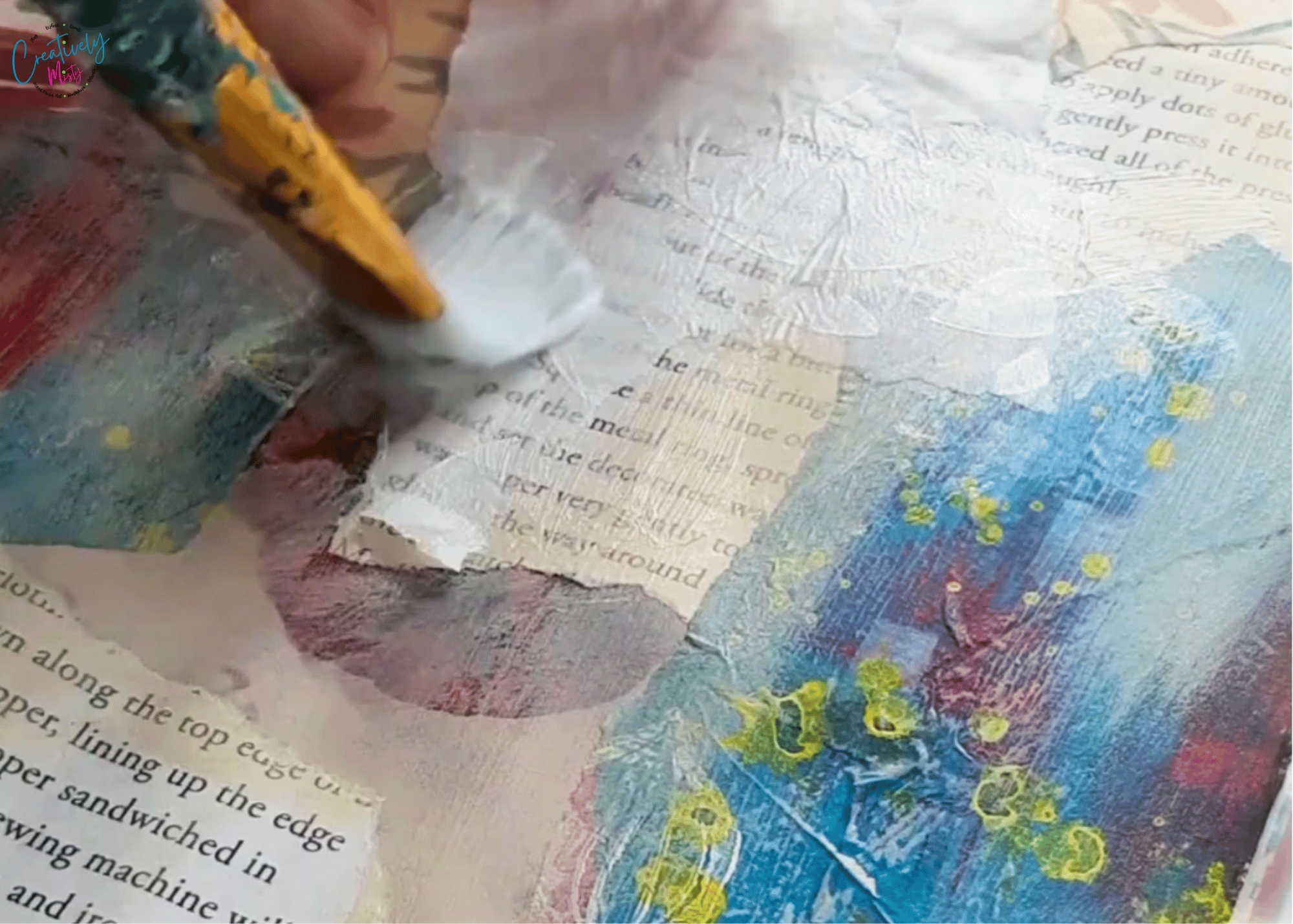
Close-up of a brush adhering white tissue paper over vintage book pages and layered paint to add texture and soften areas of a mixed media art journal page.
Use It in Your Art Journal, Too
Everything we're talking about here works beautifully in an art journal.
In fact, an art journal is one of my favorite places to experiment with tissue paper because there's no pressure to know exactly what I'm doing with it. I can tear up a custom sheet, glue down a few pieces, add paint over them, scribble across everything, and see where it takes me.
Tissue paper is especially nice when I want collage and pattern without adding the visual weight of heavier papers. It becomes part of the page very quickly, which gives me something new to respond to without necessarily taking over the entire background.
If you've never tried it before, don't make your first experiment complicated. Grab a sheet, tear off a few pieces, and add them to a page you're already working on.
See what happens when you paint over one. Leave another mostly visible. Make marks across a third.
You don't need a tissue-paper project.
You just need to start playing with what the material can do.
From Custom Tissue to Art Journal Beauty
You Don't Need Fancy Tissue Paper
There are beautiful printed and specialty tissue papers available, and there's absolutely nothing wrong with using them but you don't need them.
Plain tissue paper gives you an inexpensive surface you can change however you want. Paint it. Stamp it. Scrunch it. Tear it. Write on it. Layer it over something else.
And if an experiment doesn't work?
Well... it's tissue paper. Grab another piece.
That freedom is probably one of the reasons I enjoy using it so much. I'm much more willing to experiment with an inexpensive piece of plain tissue than a gorgeous sheet of paper I've been hoarding because it's "too pretty to use."
And we all know how that goes.
A Few Tissue Paper Ideas to Try
If you've got a sheet sitting nearby and aren't sure where to begin, pick one thing and play with it.
Crinkle a piece and use it to add raised texture. Paint a sheet with colors you already use in your artwork. Stamp black patterns onto white tissue and tear them into collage pieces. Layer a mostly transparent piece over something that feels too bold. Use torn pieces to connect two areas of your background. Or make a few sheets of custom tissue paper now and tuck them away for the next time you're creating.
You don't need to try everything at once.
In fact, I'd rather you try one idea and discover three more things you can do with it.
That's usually where the interesting stuff starts.
Keep Creating
If texture is what brought you here, head over to How to Transform Your Art with Tissue Paper next. It takes a closer look at one of my favorite ways to turn plain tissue paper into wonderfully imperfect texture.
And if you're experimenting with tissue paper because your backgrounds still feel a little flat, Why Your Mixed Media Backgrounds Look Flat digs deeper into layering, contrast, texture, and movement.

Hi, I’m Misty
Mixed media artist, creative guide, and passionate believer in the power of fearless self-expression. After years of playing small and settling for a life that didn’t feel like mine, I chose to rewrite my story through art — and I’ve never looked back.
Now, I help women just like you break free from perfectionism and self-doubt so you can reconnect with your creative voice and boldly explore what lights you up. Whether you’re picking up a paintbrush for the first time or returning to art after years away, my mission is to help you step bravely into your own magic — one joyful, messy layer at a time.
Let’s create a life (and art) you absolutely adore. 💙
If you’d like to explore mixed media with me, explore ways we can work together here.