

How to Build a Rich Art Journal Page in 30 Minutes

For years, I wanted to start art journaling.
I loved watching others build beautiful pages filled with paint, collage, scribbles, words, texture, and all those wonderfully imperfect little details. I loved the idea of having a place where I could experiment without worrying about creating a finished piece of art.
But, every time I thought about actually starting, I’d think about everything else I had going on, the added expense, and one more hobby I didn't have energy for, so I kept putting it off.
Which is pretty funny now considering how much I love my art journals!
Looking back, I think I'd made art journaling much bigger in my head than it actually needed to be. I imagined needing long afternoons in the studio to slowly build these beautiful, complicated pages when, in reality, some of my favorite pages now come together in 30 minutes or less.
I'm not trying to create as quickly as possible, and I'm certainly not racing a timer every time I sit down with my journal. I've simply learned that I don't need hours to make a page filled with color, texture, layers, and all the little details I love.
Sometimes half an hour is plenty.

Mixed media artist, Misty of Creatively Misty adding hand-drawn marks to a layered art journal page with teal and green acrylic paint, botanical patterns, stamping, and expressive details.
You Don't Need a Whole Afternoon
I think one of the easiest ways to keep ourselves from creating is to wait until we have enough time or feel ready.
We'll start that art journal when things settle down a little. We'll pull out the paints when we have a free afternoon. We'll try that new technique when there aren't twelve other things competing for our attention.
The problem, of course, is that life doesn't seem particularly interested in clearing our calendars for us.
One of the things I've learned from art journaling is that I don't have to wait for a big empty stretch of time. I can walk into my studio, grab a handful of supplies, open my journal, and spend 30 minutes creating.
The trick for me isn't trying to work faster. It's keeping the page moving.

Close-up of Misty’s hands adding details to a mixed media art journal spread featuring a colorful hummingbird, floral collage, painted circles, splatters, and layered textures.
Start Somewhere and Give Yourself Something to Respond To
I rarely know what my art journal page is going to look like before I begin. Actually, I rarely know what any of my artwork is going to look like before I begin anymore. It’s much more intuitive now and very different from how I used to create. I once thought I needed an idea before I could start, but these days I know I just need some inspiration.
Maybe I begin with two colors I want to use together. Maybe I tear something interesting out of an old magazine, glue down some book text, or start making marks. It doesn't really matter because that first layer isn't responsible for becoming the finished page.
It's just giving me somewhere to go.
Once there's something in front of me, I can respond to it. One color makes me want another. A hard edge needs softening. An area feels too empty, so I add something. Another gets too busy, so I cover part of it back up. That's how most of my pages grow. I don't think five layers ahead. I make one choice, look at what happened, and make another.
Build Depth Instead of Simply Adding More
This is probably where a quick art journal page can either start feeling rich and layered or become a whole bunch of stuff sitting on the same piece of paper.
More isn't necessarily the answer.
As the page develops, I start looking at how the different pieces are working together. I might repeat a color in another area, partially cover some collage paper with paint, add texture over an earlier layer, or carry the same kind of mark into several areas of the page.
I also let things disappear.
That used to be hard for me. Why glue down a beautiful piece of paper if I was just going to paint over half of it?
Now I know those partially hidden layers are part of what makes mixed media so interesting. You catch a little torn edge here, a bit of text there, or a color peeking through something that came later. You may not consciously notice every layer anymore, but together they give the page depth.

Mixed media artist, Misty of Creatively Misty adding finishing details to a colorful floral mixed media art journal page layered with painted flowers, collage papers, acrylic paint, and expressive mark-making.
Give Your Eye Somewhere to Land
At some point, I usually start wanting something that gives my eye a place to rest.
That doesn't necessarily mean adding one giant focal image in the middle of the page. Sometimes it's an image, sometimes it's a word or phrase, and other times it's simply an area with stronger contrast that naturally asks for more attention.
Once I have that, I look for ways to make it feel like it belongs there.
I might repeat one of its colors somewhere else, carry a mark from the background over part of it, or repeat a shape in another area. It doesn't usually take much. Those little connections are often enough to make separate layers start feeling like one page.
Then comes one of my favorite parts: all the little finishing marks.
Scribbles, lines, dots, circles, text, charcoal, paint pens... whatever I'm in the mood for that day. This is where my pages really start feeling like mine, and it's also where I can happily keep going long after the page probably has enough.
Eventually, I have to put the supplies down.

Misty of Creatively Misty creating a colorful mixed media art journal page featuring hand-painted pink flowers, green leaves, layered collage, black-and-white patterns, and the words “Choose Happy.”
Want to Try It? Give Yourself 30 Minutes
If you've been telling yourself you don't have enough time to art journal, here's a simple way to try the same basic process in just 30 minutes.
Minutes 0–10: Build Your Background
Start by getting something onto the page. Add some color, tear and glue down a little collage paper, make a few marks, or introduce some texture.
Don't worry yet about what the page is going to become. You're simply building enough visual information that you'll have something to respond to.
Layer things. Cover parts back up. Let colors overlap. Most importantly, keep moving.
Minutes 10–20: Add a Focal Point + Make Connections
Now give your eye somewhere to land.
Add an image, some text, a shape, or simply strengthen an area you already like. Then look around the page and find a few ways to connect that focal area to everything else.
You might repeat one of its colors in the background, use the same shape somewhere else, carry a mark across several layers, or repeat a texture.
You don't need everything to match. You're simply giving the different parts of the page a reason to belong together.
Minutes 20–30: Add Marks + Finishing Details
Now look at the page as a whole.
Where could you use a little more contrast? Is there a color or shape you want to repeat? Does one area need to quiet down? Is there somewhere begging for one of your favorite marks?
This is your time for scribbles, lines, dots, words, charcoal, paint pen, or whatever else makes the page feel like you.
And when the timer goes off, stop and take a look.
That doesn't mean you have to throw your hands in the air and back away from the journal. The Journal Patrol aren't going to show up if you need another five minutes. This isn't a speed challenge. The timer is simply there to remind you that you don't need an entire afternoon to have a meaningful creative session.
Maybe the page feels finished. Maybe you come back tomorrow and add another layer. Maybe you look at one section and wonder what on earth you were thinking.
All perfectly acceptable outcomes.
You just spent 30 minutes creating.
Turns Out, I Had the Energy After All
That's the part that makes me smile when I think about how long I waited to start art journaling.
I genuinely thought I didn't have the energy for it. What I didn't understand yet was that creating wasn't necessarily another thing that would take energy from me. More often than not, spending a little time at my art table actually gave some back.
What I didn't understand yet was that art journaling could fit into the little pockets of time I already had. I didn't need an entire afternoon, a perfectly organized studio, or even an idea for what I wanted to make. I could sit down for half an hour and play.
And all those little half hours have given me a place to experiment with techniques, discover color combinations I never would have planned, use the ridiculous number of paper scraps I can't seem to throw away, and sometimes make a gloriously weird page simply because that's where things went that day.
Some pages become favorites and some don't, but that was never really the point. The point is that I created them.
So if you've been wanting to start an art journal but keep telling yourself you don't have enough time or skill, maybe don't wait for that elusive free afternoon or to feel ready.
Give yourself 30 minutes.
You might be surprised by how much creativity fits inside it.
Want the 30-Minute Process Beside You While You Create?
If you'd like a little more guidance while you're actually sitting at your art table, I've turned this process into a 30-Minute Art Journal Page Guide you can keep inside your journal.
It goes beyond the simple framework I've shared here with specific ideas and prompts for each stage, plus a few questions to help you figure out what to try next when you get stuck.
Grab your 30-Minute Art Journal Page Guide here!
Keep Creating
If getting started tends to be the hardest part, you might enjoy How to Start Creating When It Feels Intimidating. I share the story of why I put off art journaling for years and some of the things that helped me finally begin.
And if you want to dig a little deeper into creating all those yummy layers, head over to Why Your Mixed Media Backgrounds Look Flat (and How to Fix It). We'll look at depth, texture, contrast, and some of the little things that help a mixed media background come alive.
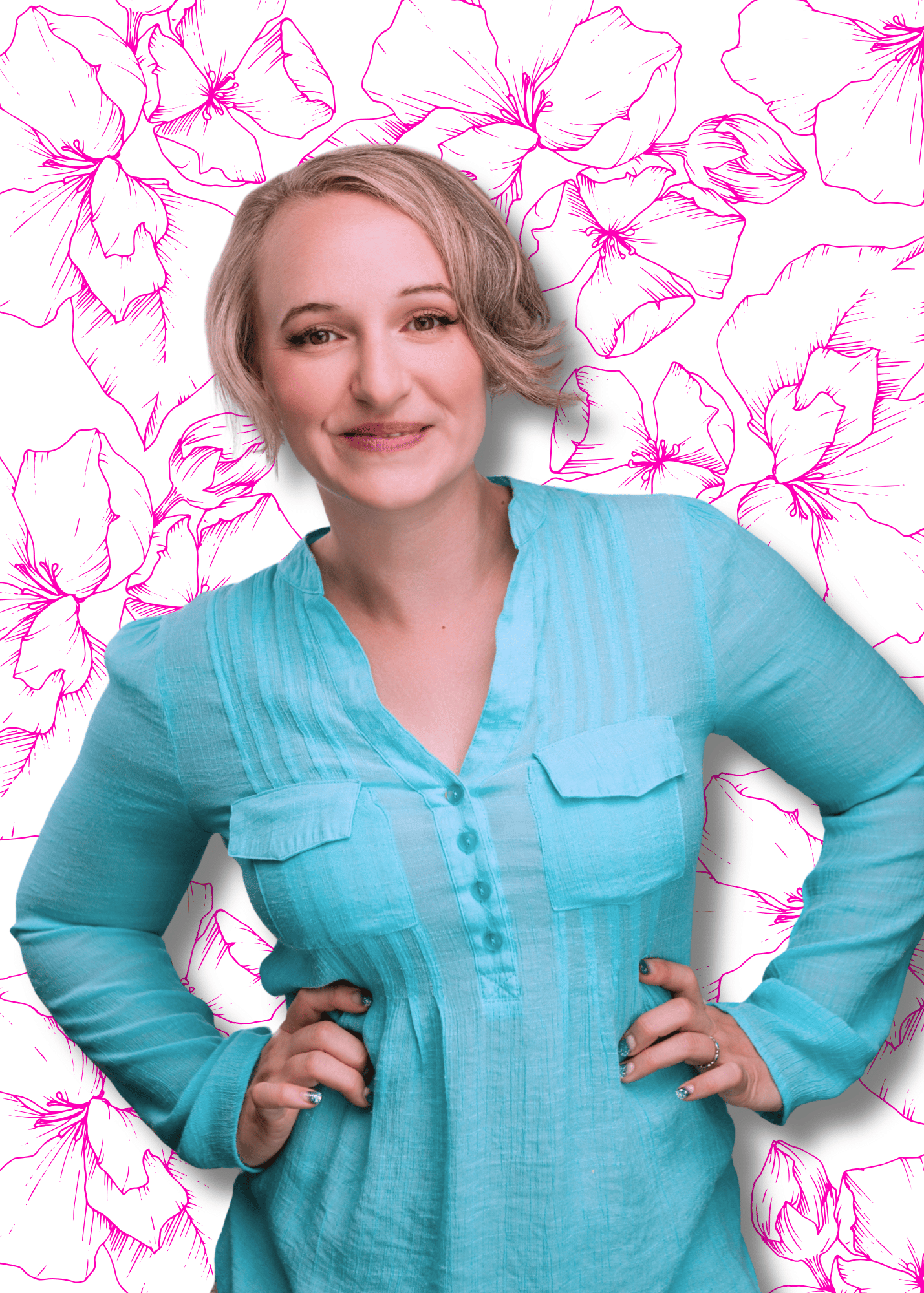
Hi, I’m Misty
Mixed media artist, creative guide, and passionate believer in the power of fearless self-expression. After years of playing small and settling for a life that didn’t feel like mine, I chose to rewrite my story through art — and I’ve never looked back.
Now, I help women just like you break free from perfectionism and self-doubt so you can reconnect with your creative voice and boldly explore what lights you up. Whether you’re picking up a paintbrush for the first time or returning to art after years away, my mission is to help you step bravely into your own magic — one joyful, messy layer at a time.
Let’s create a life (and art) you absolutely adore. 💙
If you’d like to explore mixed media with me, explore ways we can work together here.